Jump to:
Plenty of businesses start at home, often in a shed or garage, but there are more options than that. A garden building can give you a place to work, keep costs down, and save you from renting elsewhere. This guide looks at different ways you can use garden buildings for business, what types work best, and where planning rules may apply.
But before you get too far into the building side, do these first:
- Register the company (if applicable)
- Handle tax and insurance
- Make it easy for people to find you online
- Fire safety and security: electrics, smoke alarms, safe storage, and locks
And there’s more to consider as you plan—keep reading.
Starting a Business from a Shed
A shed might not be the first thing you picture, but it can suit small-scale production or hands-on work. It’s often a practical option for making products on site, such as candles, cosmetics, handmade decor, or small batch food items (subject to passing inspections). British beer company Bulletproof Brewing famously started out in a shed before expanding. For food and drink items, you’ll usually need local authority food business registration and to meet hygiene requirements.
Shed sizes are an important consideration for the needs of your business. A medium to large unit is a better option, though, as a smaller one might only work as storage. And if you plan to use it most of the year, consider insulation, unless your shed has it built in. Working with fumes, glue, or anything that gives off heat or smells? You’ll need shed ventilation, too.
Planning Permission for Garden Buildings Used for Business
In the UK, you usually* don’t need planning permission for a garden building if it’s just for your home. That includes storage, a hobby room, a home office, or a workshop you use alongside your house.
Once the building is used for business, things can change. If clients come regularly, products are sold from the space, or it’s being used more like a workplace, planning permission may be needed, as per the Planning Portal.
*Some basic rules most outbuildings need to follow (to be permitted developments and not need planning permission) are:
- Maximum height of 2.5m if it’s within 2m of a boundary
- Up to 4m high for a dual-pitched roof, or 3m for a flat roof if further from boundaries
- Covers no more than half the garden
- Not used as a living space
- Not on land with extra restrictions, like listed buildings
Planning permission is more likely if:
- Clients or customers visit regularly
- The business makes noise, fumes, or smells
- Goods are made on a commercial scale
- Employees work there
- The activity changes how the council sees your property (e.g. more traffic, noise, visits, or smells)
Always check in with your local planning authority (LPA) to be on the safe side, especially before your business grows.
Planning Permission for Garden Buildings
Now onto the business ideas!
Garden Workshop for Craft and Making
Hands-on craft and making from a garden workshop suits that kind of business. Ideally, a roomier setup is ideal for workbenches, tools, and storage for materials.
Take our BillyOh Alpine Workshop Log Cabin in 13ft x 16ft, for instance. It’s styled after the classic vision of a forest cabin, with Georgian windows. Paint it or leave it as is, it’ll still look welcoming. Inside, the floor bearers are strong enough to support a few workbenches and more.
Comfort matters just as much. You might need some upgrades, like installing electricity or furnishing the space. All this helps make the workshop functional for woodworking, jewellery making, small-scale product assembly, or other projects.
This lets you work on your craft and run your business at your own pace, all from your own garden.
Interested?
Wooden Garage for Mechanical Repairs
Bikes, lawnmowers, and minor machinery—make the tuning magic happen in a wooden garage. This is perfect if you offer repairs locally or pick up regular side jobs. Tools stay where you need them, and you don’t get interrupted.
Go for a garage with double doors for easy access, especially if you often wheel things in and out. Our BillyOh Aston Wooden Garage is one way to do it. With a spacious 13ft x 18ft that can fit SUVs, estates and sports cars, imagine how big your workspace is inside! The front double door is paired with an integrated side door for more convenient access.
When browsing your options, you might notice that most wooden garages don’t have flooring. That’s not a deal-breaker, but it’s something to plan for. A solid, level base, like concrete, is recommended. It doesn’t have to be a full garage either. It can be as small or simple as this motorbike repair garage shared by our customer.
Personal Garden Office for Remote Work
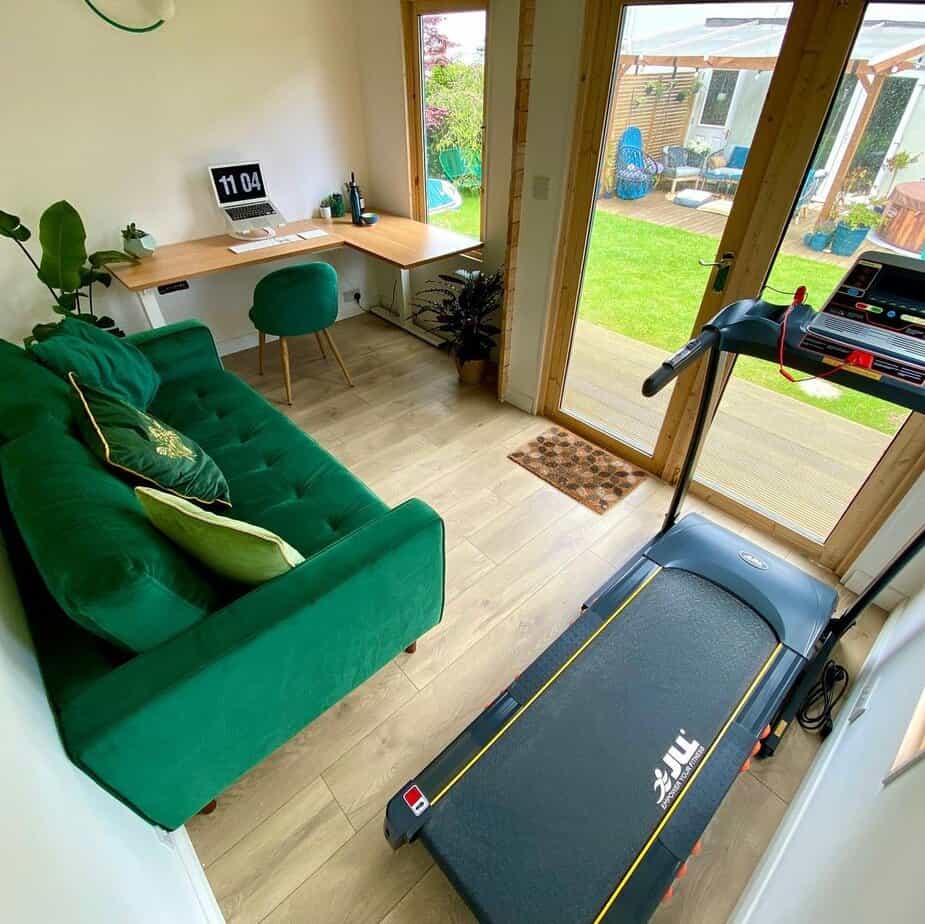
For some, starting a business at home is about having a space to freelance or offer services online. If you’re one of them, skip the need to rent somewhere with a garden office and work in your own space.
You could use it for anything that needs a laptop, a reliable internet connection, and a bit of quiet. This includes, but isn’t limited to, admin work, virtual assistance, and online coaching. Shut the door at the end of the day and switch off, which you can’t do when working from your kitchen table.
Check out these garden office layout ideas or browse our available models for inspiration:
Garden Studio for Creative Businesses
This one’s for you if you want to separate your creative work from the rest of the house. It’s perfect for photography, jewellery making, or packaging. Or you can use the room to get messy with painting, making candles, clay projects, or pottery.
And even though it’s a studio, you’ll likely spend hours here. A comfy chair and a foldaway table for resting and snacking can go a long way. You won’t need as much heating in winter if it’s an insulated garden room. You can work comfortably year-round, without the cold or heat affecting your materials.
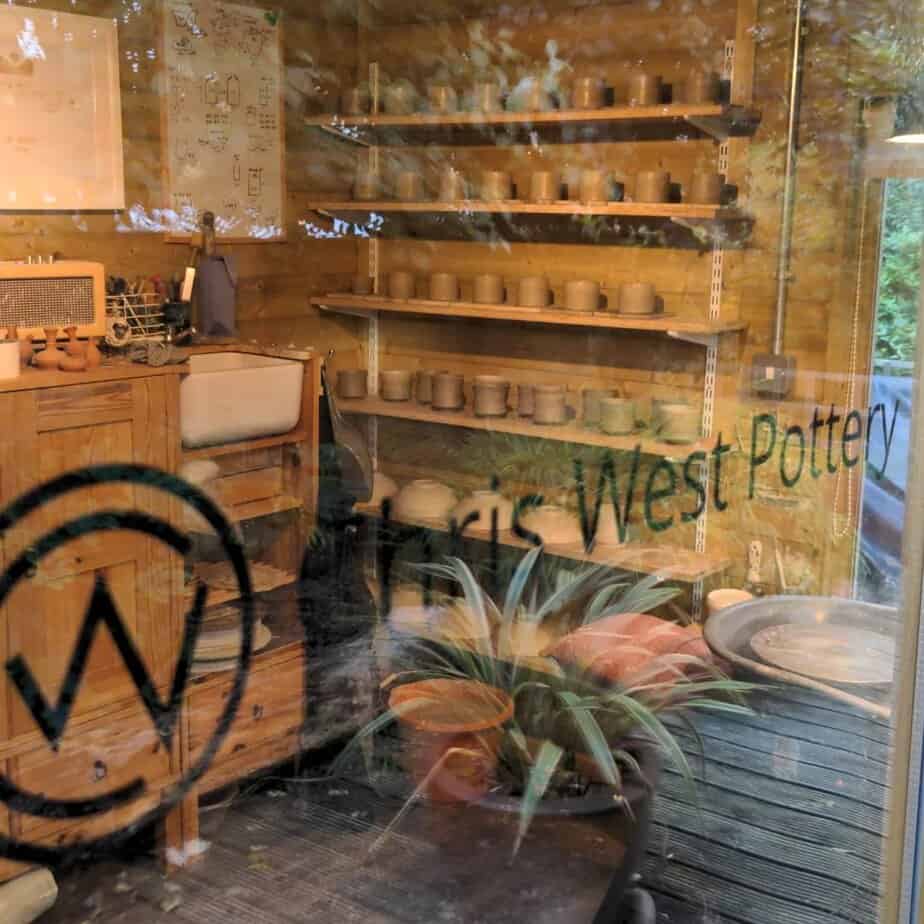
Just take a look at how one of our customers has turned her garden room into a pottery studio.
Note: If clients will be visiting, make sure the layout, access, and privacy are all top-tier, as these can affect planning rules. You are responsible for customer safety.
Nail Salon or Pet Grooming Garden Service
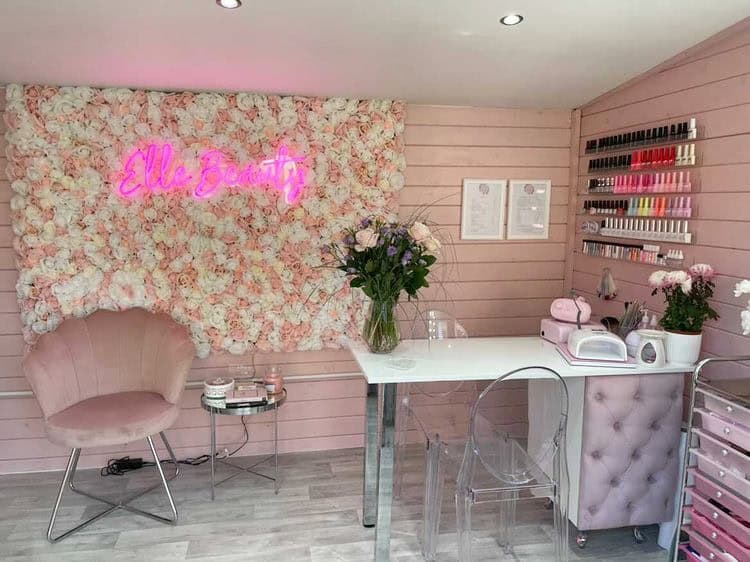
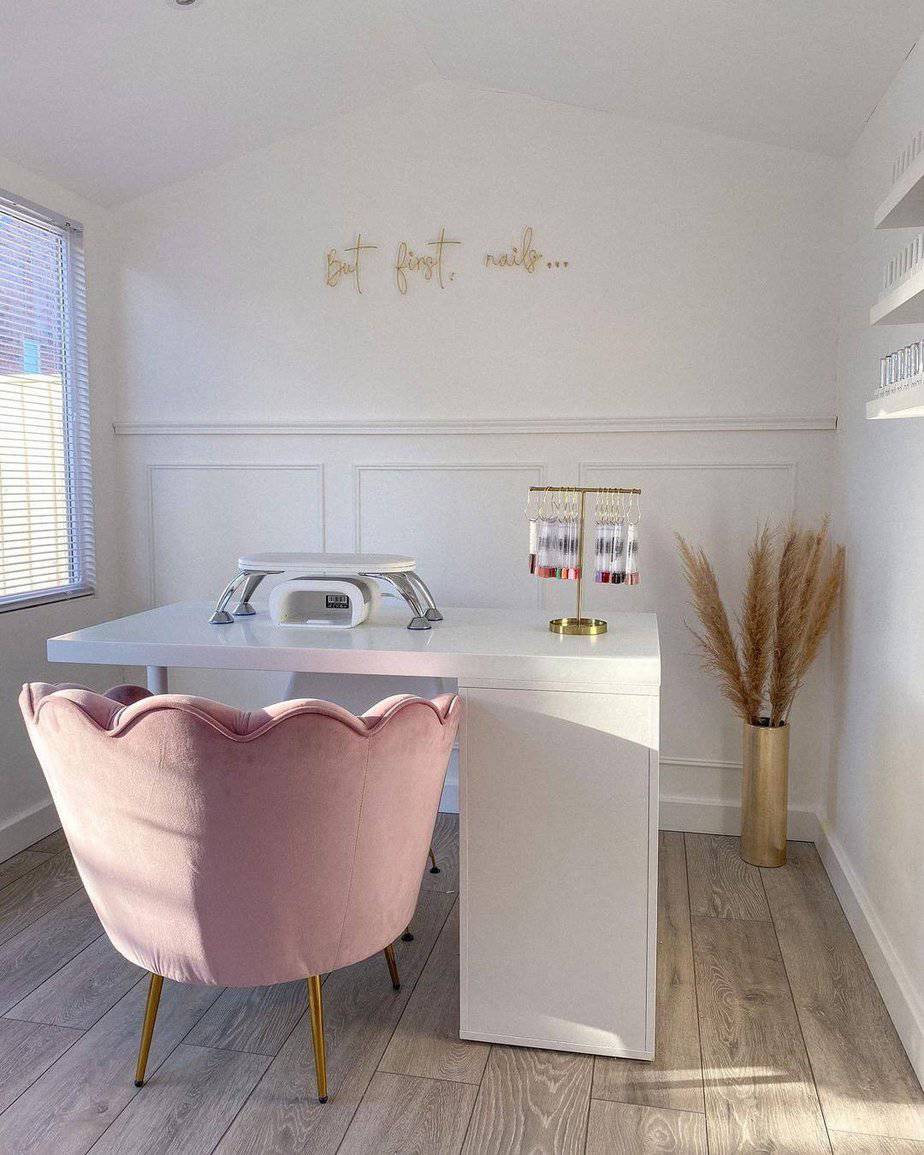
Nail salons and pet grooming services in gardens are catching on across the UK. Take a cue from Elle Beauty—our lovely customer’s nail studio. We personally love the small LED sign on the DIY rose wall and theshelves for polishes.
Pet grooming is another option. Instead of a nail station, you’ll need a space for washing and trimming pets. Most importantly, you need to plan and design to make it comfortable for pets. It can take a bit of time to transform the space into one, but it’s worth it when your furry clients keep coming back.
You can take any of these garden buildings for business and shape them around the kind of work you do. Either way, it will need to be wired up for power. Read this guide next to learn more: How to Run Electricity to a Garden Building