Jump to:
An empty yard can be just as intimidating as an overgrown one. At least weeds look like something. Bare soil feels like responsibility. The temptation is to rush out and buy plants straight away. Resist it.
Read on, and this guide will walk you through the basics so you’re not digging things up again in six months.
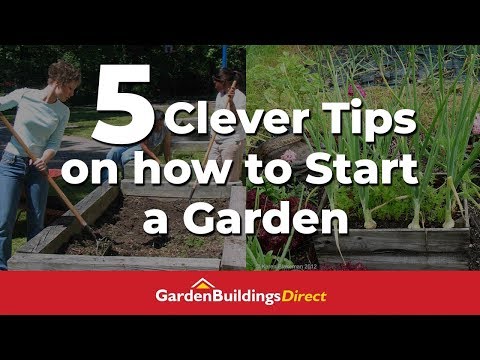
How to Start a Garden for Beginners
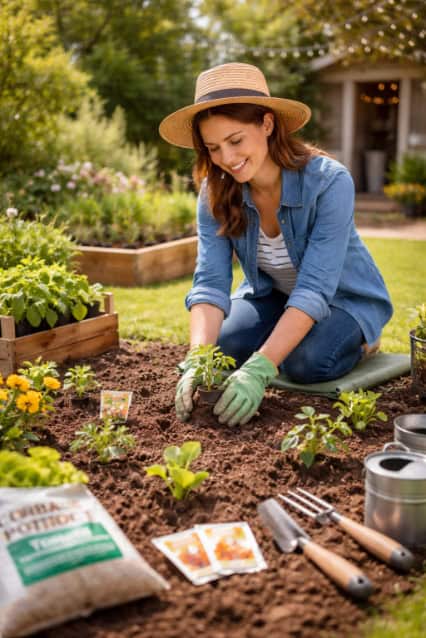
Let’s take those first steps and turn it into a garden that works for you.
Figure out your starting point
Look around. Your garden might be a triangle of weeds, an overgrown lawn, or a patch of bare dirt. Either way, the first step isn’t digging or planting—it’s getting a rough idea for where things could sit.
- If it’s overgrown: Grab a strimmer or mower and cut it back hard. Pull out any big roots, old boards, or rubbish. Then, mark out the spots where you might want beds, a path, or a seating area.
- If it’s empty: Notice where the sun hits, where the shade falls, and where the ground drains or puddles. Work out spots for standing, sitting, and storing your tools.
Give yourself a few minutes to explore the garden. You’ll know where to start once you do.
Sort out your first beds
Beds are where your garden starts to feel like a garden. Don’t worry about making perfect shapes. Straight lines or gentle curves are enough; wiggly edges can come later.
- Mark where your bed will go with a hosepipe or a length of rope (literally, use anything that would work).
- If you’re turning the lawn into beds, dig out the grass first.
- Loosen the soil and mix in some compost. That’s all you need to give plants a decent start.
- Make your beds wide enough to reach into without stepping on the soil.
If your garden is a mess, do beds first. They give some structure and make the rest of the space easier to figure out. After the first bed is done, the rest of the layout will fall into place.
Soil prep and fertilising
Digging your beds is just the start. Check the soil with a spade or fork. If it’s heavy clay, it will feel dense and sticky, while sandy soil will crumble easily. Break it up so roots can spread without getting stuck, and you’ll see your plants settle in much quicker.
Add some compost or well-rotted manure and mix it in. A good rule for compost is about one to two large buckets (or half a wheelbarrow) per square metre. If you are adding a slow-release fertiliser like pelleted chicken manure, a thick handful per square metre is plenty.
Decide on the lawn
Now that the beds are in, do you think a lawn is necessary? Lawns are nice to have, but they come with mowing, watering, and edging.
If you do, find the area you want grass, level it, pull out the stones, and sow seed in spring or early autumn. Give it a few weeks of water while it settles.
Not bothered about having a full lawn? Chop it back, push your beds a bit further out, or turn some of the leftover space into gravel or a paved corner. Toss in a few tough plants where it looks awkward to fill the gaps, and they’ll take care of themselves.
Get more tips here:
Lawn Care Ideas for a Healthier Landscape
Carve out walkways
Paths stop you from turning the garden into a mud bath, plain and simple. Notice the spots you end up walking the most. Those are the lines the path should take.
Gravel is easy to throw down and doesn’t need much looking after. Put a weed membrane under it and use some edging to keep it clean-looking. Slabs or paving are more solid and comfortable to step on for spots you walk on a lot.
No need to cover every inch. Just lay it where you walk the most to keep the mud under control.
Invest in a garden storage
At some point, you’ll want the clutter out of the way: tools, pots, bikes… all of it. That’s where a shed comes in.
Wooden sheds, in particular, are a favourite. They come in plenty of shapes and sizes, and some even come as kits for quick installation. With tongue and groove (T&G) cladding, you can hammer in extra hooks and add wall shelves. Even better, paint the whole structure to match your garden.
Add a greenhouse or potting shed
A greenhouse doesn’t have to be massive to make a difference. Even a small one gives you more time to start seedlings and keep plants going into autumn. Moreover, it lets you try growing things you wouldn’t normally manage outside.
A potting shed works in a similar way. It’s a mini workspace for potting plants and storing compost and tools. You don’t need much room either; just enough to spread out a few trays or a potting bench.
Tip: Have water nearby, whether it’s a tap or a water butt. With one, topping up seedlings, pots, or tubs is a lot easier. It also helps prevent you from skipping watering.
Round-up
This guide gives you everything you need to get started, but feel free to tweak things as you go. Start small, try out what works, and change things if they don’t. Good luck!
Next on your reading list: National Gardening Week 2026: Growing Tips