Jump to:
In most cases, no, planning permission isn’t needed for garden rooms (also known as garden buildings). But there are limitations you should be aware of, including:
- What counts as “permitted development”
- When permission is required
- How to ensure your garden room complies
Read on to avoid legal issues.
Is a Garden Room a Permitted Development?
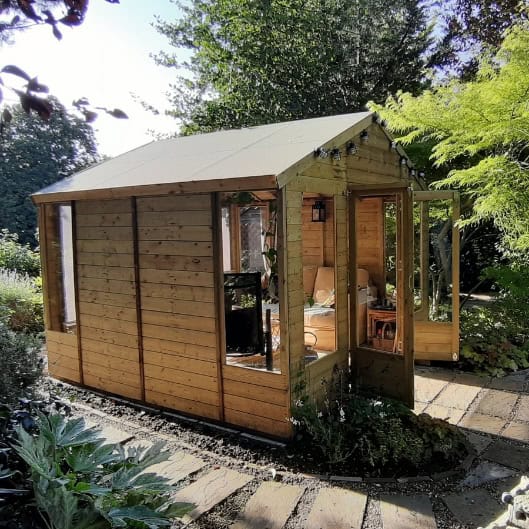
Yes, in most cases, garden rooms qualify under permitted development rights, which means you can build one without applying for planning permission – provided they follow the rules. Sheds, log cabins, summer houses, and greenhouses are treated the same.
Some properties will always need planning permission to build almost anything in the garden, or they will have their own specially designated rules for what classes as a permitted development. These include listed properties, neighbourhoods under an Article 4 direction, conservation areas, national parks, areas of outstanding natural beauty, or World Heritage Sites. If any of these apply to you, you will need to contact your local planning authority to get started.
The main rules for a permitted development in England are that it:
- Must be behind the front wall of your house (not in front gardens)
- Must not take up more than 50% of your total garden space
- Must stay within height limits:
- Maximum 2.5m if within 2m of a boundary
- Up to 4m for a dual-pitched roof (if further away)
- Up to 3m for other roof types
- Must be single-storey only
- Must not include a balcony, veranda, or raised platform taller than 30cm
- Must not be used as self-contained accommodation (also referred to as “habitable space”)
Can You Live in a Shed? UK Beds in Sheds Law Explained
If your garden room exceeds any of these limits, planning permission will be required. These rules apply whether the structure is temporary or permanent.
Planning Permission for a Garden Office
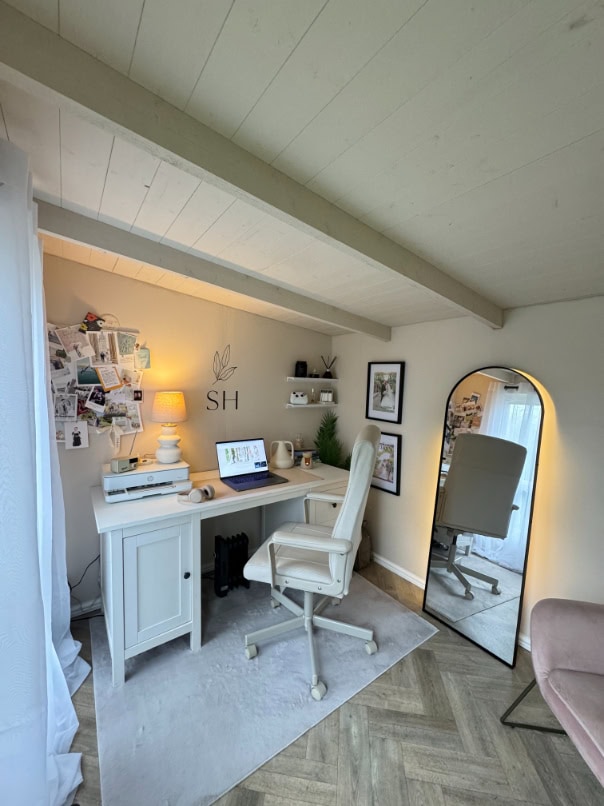
Garden offices are treated the same as any other garden building when it comes to planning rules. So, if your office follows the size, height, and placement limits we outlined earlier, it won’t need planning permission.
Things to consider:
- Position in the garden: Place your garden office where it doesn’t block your neighbour’s view or sunlight. Keep a small gap from the boundaries to make the building easier to maintain, and make it more than 2 metres if you’ll be going over 2.5 metres tall.
- Will you be inviting customers? Some customers set up photography studios, salons, pet grooming services, or consultancy businesses in their gardens, where clients are invited to attend. This might classify as a material change of use of your property, and that is very likely to make it require planning permission. If your neighbours notice that suddenly there are more visitors at your property, taking up parking space and making more noise, you might be in for some complaints. Getting permission in this instance usually involves agreeing to restrictions on customer numbers and opening hours.
- Building features: Adding insulation, running electricity, or installing plumbing doesn’t affect the rules. However, any electrical and plumbing work will still need to meet building regulations.
Building regulations are rules that ensure garden buildings are safe, stable, and meet the required standards.
- Long-term use: If you plan to use the office year-round or as a workspace with computers and heating, building it as a permanent structure on a solid base is the most practical choice. A temporary setup may not be suitable for this type of use, even if it avoids permission rules.
How to Stay Within Permitted Development Rights for Garden Rooms
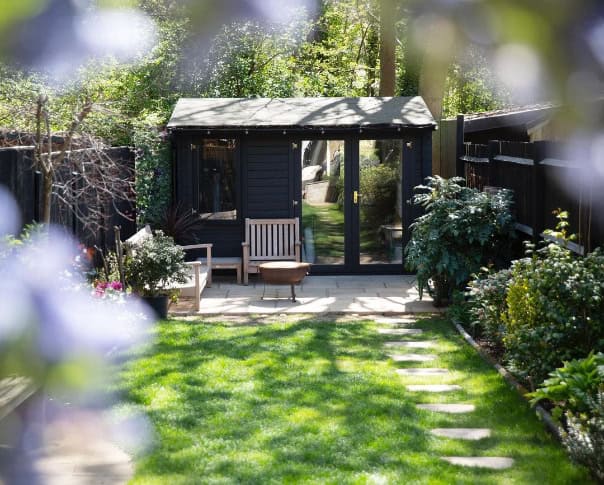
Even when your garden room meets the general rules, a little planning goes a long way.
- Map out your space: Measure your garden and mark where the building will sit.
- Mind the neighbours: Keep a gap from boundaries to make sure the roof stays within height limits and avoid neighbour disputes.
- Plan for long-term use: Use the outbuilding as a home office, hobby room, or a garden retreat rather than converting it into a ‘habitable’ space. Long-term, not full-time.
Learn more:
Can You Live in a Shed? UK Beds in Sheds Law Explained
The rules apply to any garden room used as a living space.
- Keep records: Note the building’s dimensions, location, and any council correspondence. Doing this can be useful if questions come up in the future.
Key Takeaways
- Most garden rooms do not need planning permission.
- Follow size, height, and placement within the permitted development right rules to stay compliant.
- Always double-check with your local council for special cases, especially if your property is in a protected area.
Plan ahead to avoid issues and build with confidence!