Jump to:
Insulation is great for garden sheds, and the same goes for ventilation. One blankets the structure from the cold, while the other stops moisture from building up. So yes, an insulated shed does need ventilation. Read on, and we’ll explain why.
If you’re undertaking DIY insulation, just bear in mind that this is a warranty-voiding modification.
Why Moisture Builds Up in an Insulated Shed?
It’s because warm, damp air gets trapped inside the shed, insulated or not. Condensation occurs when the air inside your shed remains warmer than the outside, so when this air touches the walls, roof, or floor, it condenses into water. If the structure doesn’t have a way for this damp air to escape, one of the places it can settle is behind the insulation. This causes mould, rot, and can even ruin the insulation itself over time.
Keeping air moving is the best way to avoid such problems.
How Ventilation Helps in an Insulated Shed?
Shed ventilation gives trapped moisture a way to escape and lets fresh air in. The temperature and humidity is more balanced, which makes it easy for your insulation to do its job.
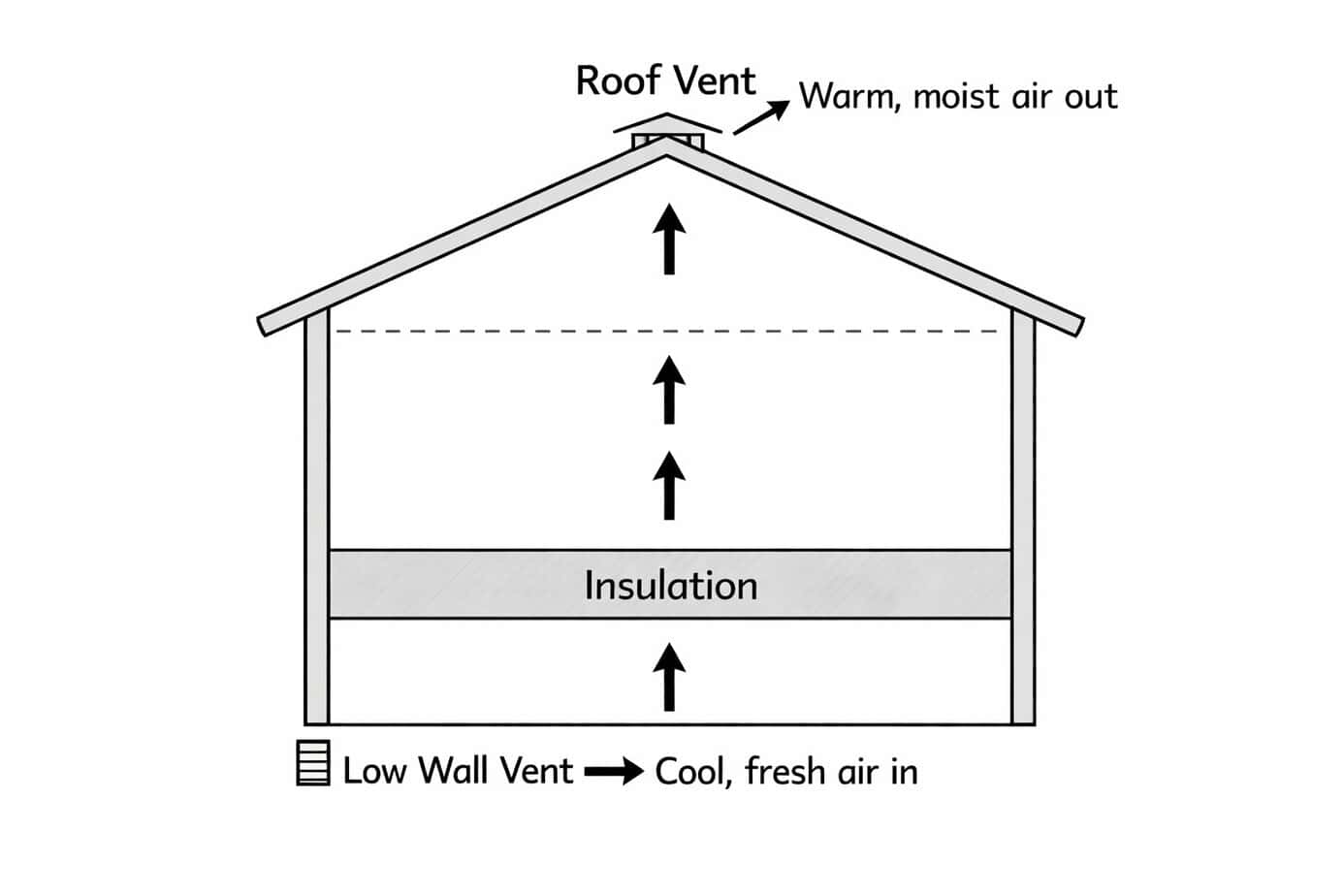
Shed Airflow Layout
You might be wondering about a damp-proof membrane. While it stops moisture coming up from the ground or walls, it can’t remove moisture that forms inside the shed. That’s why ventilation is still needed. Vents move this trapped damp out, keeping the insulation and structure dry.
Where Should Ventilation Go?
Ventilation should go where it can move the air through the shed. High vents near the roof let warm, moist air escape, while low vents close to the floor allow cooler air to flow in. This helps warm and cool air swap places, preventing damp from settling in the walls or roof.
Tip: You also might want to consider covering all vent holes with grilles to keep insects at bay.
Types of shed ventilation
There are a few ways to ventilate your shed, including:
- Wall vents, high and low on opposite walls.
- Roof vents or ridge vents to let warm air escape straight from the top.
- Trickle vents in windows for a small, continuous airflow without opening the windows.
- Small fans just for extra movement in bigger or more insulated sheds.
See our dedicated guide below for more:
Shed Ventilation: How-to and Things to Consider
What Happens if You Skip Ventilation?
Skipping ventilation can make the shed uncomfortable to use, if it’s closed up most of the time. The air can feel stuffy and damp, especially in summer or winter. Bikes, tools, or boxes of garden supplies can pick up moisture and start to smell or get damaged. Timber and fittings may warp or weaken over time, making the shed less sturdy and harder to maintain.
If moisture starts to settle on the insulation inside the walls, you’re in for a tough time. This trapped moisture can lead to hidden mould, followed by rot in the wooden frame or walls. The first sign of this might be a musty smell, but it could go unnoticed until it has caused significant damage, making repairs more costly and challenging.
Keep the air moving so you can make the most of your garden investment. If you keep your shed well maintained, you might even have a higher chance of increasing your property value by around 5 to 20%.
Does a Shed Add Value to Your Home?
You know what to do!
Our range of garden sheds comes in prefab kits that you can assemble yourself. Many of them can be adapted if you want to add vents or other airflow solutions. Want to skip the hassle of the installation process? Our insulated garden rooms fill the cavity and leave no room for moisture entry.
There’s something for you there, so check them out below: