Jump to:
If you’re serious about growing, a potting shed earns its place in the garden faster than almost anything else you could put there.
Potting sheds combine the best of both worlds: the structural security of a shed with the light-maximising design of a greenhouse. Here’s what to know before you buy.
What Is a Potting Shed?
A potting shed is a garden building designed for plant work and storage. While they are similar in structure to any other shed, there are some key features that make them stand apart.
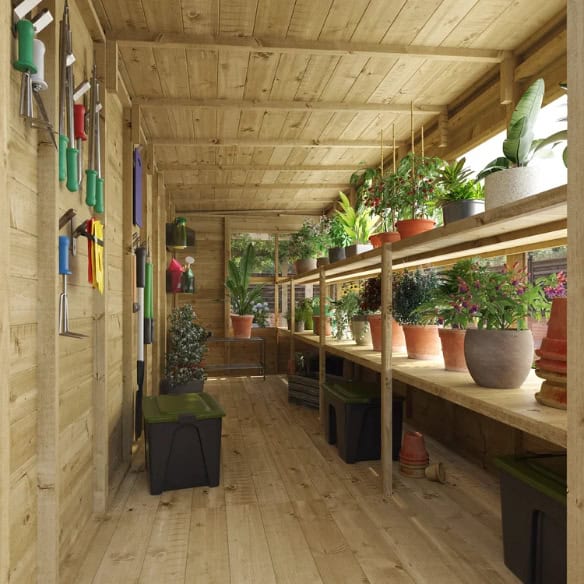
One section is fitted with a planting table for potted plants, sometimes with multiple tiers. This shelf, also referred to as a potting bench, is where you can plant and prune, with the bottom shelf at waist height for convenience. That area also tends to have more windows or glazing to bring in daylight. The opposite side gives you space for equipment, compost, pots, and even a lawnmower, depending on the size.
It combines a shed and a greenhouse in terms of use: preparing, sorting, and organising plants before they’re transferred outside. It suits gardeners who are just starting or don’t want to commit to a full-scale greenhouse yet.
Potting Sheds vs. Greenhouses: The Comparison
| Feature | Potting Shed | Greenhouse |
|---|---|---|
| Utility | Dual-purpose: grow and store. | Primarily for growing. |
| Heat Retention | Better overnight heat (timber walls retain heat). | Higher daytime peaks; loses heat faster overnight. |
| Durability | High (robust timber frame). | Moderate (shatterproof polycarbonate or styrene glazing recommended). |
| Maintenance | Moderate (standard timber upkeep). | High (frequent cleaning/glazing repairs). |
| Cost | Often more affordable than premium greenhouses. | Varies — styrene-glazed models can be cheaper than a potting shed. |
Get the benefits of a greenhouse and the security of a shed in one efficient build. Upgrade your garden workspace today.
Things to Consider Before You Buy a Potting Shed
A potting shed is an investment in your garden. Here’s how to position and prepare yours to maximise its performance year-round.
Orientation is everything
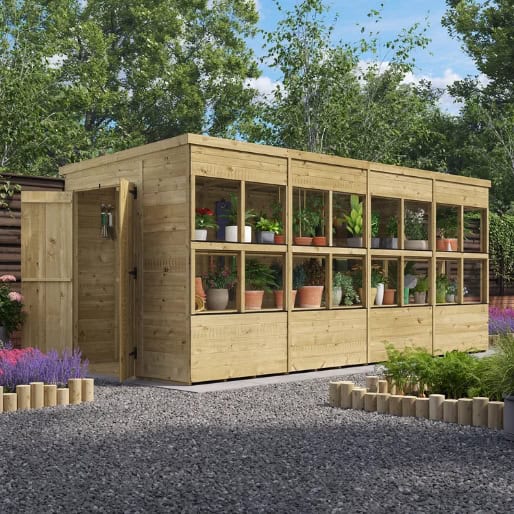
You’re buying this building for its light. Ensure the window side faces south to maximise solar exposure throughout the day. If a south-facing spot isn’t available, east or west will suffice, but avoid north-facing positions, as your seedlings will struggle.
Potting Shed base requirements
A potting shed requires a level, firm, and dry base. A concrete slab, solid paving, or a level bed of gravel are all acceptable. Don’t place it directly onto grass or soil. The floor is held up by pressure-treated bearers.
Avoid common pitfalls by following our step-by-step installation method for building a shed base.
What you can grow in a potting shed
A potting shed gives you a sheltered space for starting, raising, and protecting plants through the year. Use it for growing:
- Vegetables: Tomatoes, cucumbers, peppers, chillies, lettuce, spinach, spring onions, radishes
- Herbs: Basil, parsley, coriander, chives, mint, thyme
- Flowers: Marigolds, sweet peas, sunflowers (early stages), petunias, nasturtiums
- Seed starting: Any vegetable or flower seeds that need a warm, bright space to germinate
- Overwintering plants: Pelargoniums, fuchsias, dahlias (tubers stored dry), tender perennials. (Unheated potting sheds won’t support tropical or hard-tender plants like citrus through winter.)
Take advantage of the potting bench and use it for seed trays. The combination of solid walls (which retain warmth) and a tiered glazed front (which provides light) creates the ideal environment for germinating seeds and raising young plants. When winter comes, keep vulnerable perennials inside for frost protection.
Tip: Keep your potting bench clear of heavy, wet pots when not in use. Regularly wipe it down with a mild disinfectant to prevent the build-up of soil-borne pathogens that can harm young seedlings.
Potting Shed Maintenance Tips from the Experts
We build our potting sheds and garden buildings to last, but they require upkeep to prevent rot and weather damage.
- Wood treatment: If your shed isn’t pressure-treated, apply a high-quality water-based wood preservative annually. Pressure-treated buildings (like our BillyOh Planthouse) already have factory-level protection against rot — but an annual coloured coat keeps the finish looking fresh and prevents water absorption.
- Ventilation: Open the doors or windows on dry, sunny days, even in winter. This prevents stagnant air and humidity build-up, which encourages mould and fungal diseases on your plants.
Get more tips here on how to prepare your shed for winter.
- Check seals: Inspect the window seals periodically to ensure no water is tracking into the timber frame.
Round-up
A potting shed is for you if you want a sheltered growing space without adding clutter to the garden. You get a waist-height workbench (depending on the model) for potting, sowing, sorting, and storing, along with a solid timber structure that stands up well in all weather.
Start your growing journey today.
FAQ
How does the workbench height compare to a standard table?
Most potting shed workbenches are set between 90cm and 110cm (approximately 3 to 3.5 feet) — for example, the BillyOh Planthouse has a top shelf at 110cm (3’7″) and a lower shelf at 55cm (1’10”), giving you both standing workspace and ground-level storage. This is higher than a standard outdoor table or garden bench. This helps reduce lower back strain during repetitive tasks like pricking out seedlings or potting on.
You can also build your own DIY workbench and adjust the height to suit your needs.
Can I insulate a potting shed after it’s been delivered?
Yes. You can install rigid insulation boards (such as PIR) between the internal framing. We recommend securing a vapour barrier over the insulation before cladding it with plywood or OSB to prevent trapped moisture from rotting your frame. This is a common upgrade for using the potting shed for overwintering tender plants.
How much space should I leave around for maintenance?
Leave at least 60cm of external clearance around all sides of the building. This makes it easier to apply wood preservative and stops plants growing against the timber, which can lead to damp, rot, and fungal decay.