Jump to:
The demand for garden offices has skyrocketed in the UK, with more people working from home. If you’re one of them, investing in one may be worth considering. But as with any investment, it helps to understand the potential costs involved.
This guide breaks down the general expenses you can expect from a DIY build or a self-assembly kit.
Breakdown Cost of Building a Garden Office Building
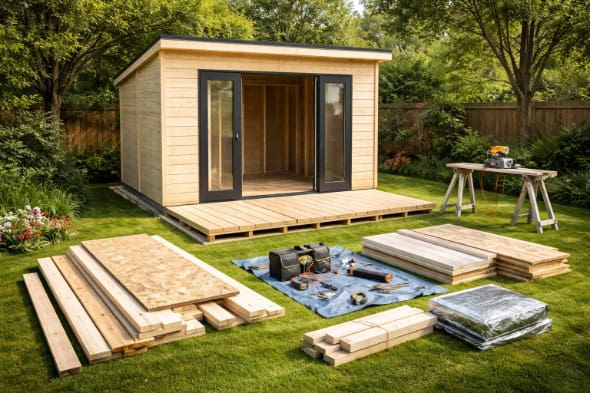
The building itself takes up the biggest chunk of the budget.
A small garden office (around 2.4m x 2.4m) usually starts at £3,000 and £5,000. This covers basic insulation, single doors, and standard windows.
Meanwhile, a medium-sized office (around 3m x 3m or 4m x 3m) tends to sit between £5,000 and £9,000. This range gives better insulation, double glazing, and more room inside.
In contrast, a large garden office (4m x 4m and above) often costs £9,000 to £15,000. Within this budget, you can have thicker walls, upgraded insulation, and wider glazing. Even better, a generous space that suits full-time use.
But that’s not all—extras can add up quickly, including: base, electricity, lighting, and more.
Base cost for a garden office
A concrete base costs around £800 to £1,500, depending on size and ground conditions. It suits permanent use and supports heavier insulated buildings. A paving slab base costs less, often £300 to £700, but suits lighter use.
Another common base option is timber, but it’s not the best one for a permanent structure. Eventually the base would decay as its preservative expires, so concrete or slabs are your best option.
Electricity and lighting setup
Power turns a shed into an office. Costs vary based on distance from the house and local electrician rates.
Running electricity from the house can cost £500 to £1,500. This covers trenching, armoured cable, sockets, and a small consumer unit. Adding lighting can bring the total to around £100 to £300, depending on the type and number of fittings.
This cost can be significantly reduced by keeping the garden office relatively close to your house. If you can keep it on the patio area, that can help immensely.
How to Run Electricity to a Garden Office
Ongoing costs to plan for
Yes, there’s more.
Wood treatment is roughly £40 to £80 every one to three years, based on finish and exposure. Energy costs depend on use. Heating your office comes in at £20 to £40 per month during colder months. Summer use costs much less.
Internet access is another small cost (provided you need it for your work). Most of us already have home broadband as a living cost, of course. But you might need some extra hardware to make the extension reach your garden building. A wi-fi extender can cost between £20 and £80, and you’ll probably want a powerful one for reliability. Alternatively, plan for an ethernet cable to be combined with your power wiring when that’s installed. Or you’ll be using a lot of mobile data as you hot-spot.
Self-Assembly Kit vs DIY Build
Prefab garden offices give you a few ways to get your office up without breaking the bank.
Self-assembly kits come with pre-cut timber, instructions, and all the parts you need. They range from £3,000 to £7,000 and up, saving £800 to £2,000 compared with a fully built unit.
You’re even luckier when you catch the sale, e.g. an insulated garden room with 30-40% off its £7,000 price tag. Speaking of discounts, you wouldn’t want to miss our limited-time offers, which you can check below:
Building it yourself gives you full control over timber, windows, insulation, and size. Labour is free, provided you’ve got the skills. However, materials cost around 2,500 to £6,000 for a small to medium office without the extras. Not to mention that the process takes longer. There are a lot of parts to a wooden garden room, so doing this without mass-production tools significantly lengthens the time it takes to cut everything to size.
Getting your garden office professionally built
If DIY isn’t your thing, hiring a professional can save time, stress, and mistakes. But the fee starts at £800 to £2,500 and higher, depending on the size of the office and how easy it is to access your garden. Remote locations, steep slopes, or tight paths can increase the price a bit.
In return, you get a ready-to-use office with doors, windows, and insulation fitted right. The risk of gaps, leaks, or structural issues is much lower. They can also set up the electricity and lighting, sometimes for an additional charge. Or, you can do that yourself with these considerations in mind:
Top 5 Questions to Consider Before Installing Garden Building Electricity
Round-up
There’s no one-size-fits-all answer, but we hope you find this guide helpful as you plan your garden office. Whichever route you take, knowing the costs upfront makes the process less stressful. Good luck!
Get more tips here: How to Suit Your Garden Office to Your Job