Jump to:
When investing in a shed, the budget shouldn’t stop at the price tag. There are extra costs that come in once it’s in your garden. Here’s what feeds into the total:
- The shed itself (manufacture, materials, and retail price)
- Delivery and installation, if you’re not building it yourself
- A base to support the structure
- Timber treatment for wooden sheds
- Electrics, if you plan to run power
- Planning application fee in certain setups
Upfront costs and later expenses combine to give the total you need to budget for. Keep reading.
How Much Are Sheds in the UK?
The shed itself is the starting point, but prices vary heavily based on material, size, and build quality.
Wooden sheds (most common)
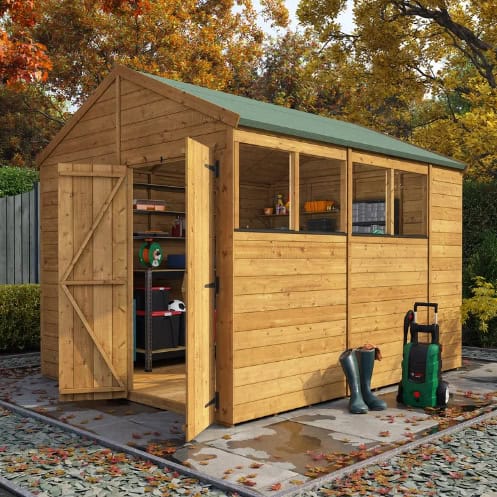
- £300 – £800: Budget range for small sheds and overlap sheds
- £800 – £1,500: Tongue and groove sheds
- £1,500 – £3,000+: Larger, premium builds, or pressure treated sheds
Good quality timber sheds tend to have stronger frames than standard plastic or lightweight metal sheds. However, it comes with ongoing upkeep. Treatment isn’t optional; skip it, and the lifespan decreases.
Metal sheds
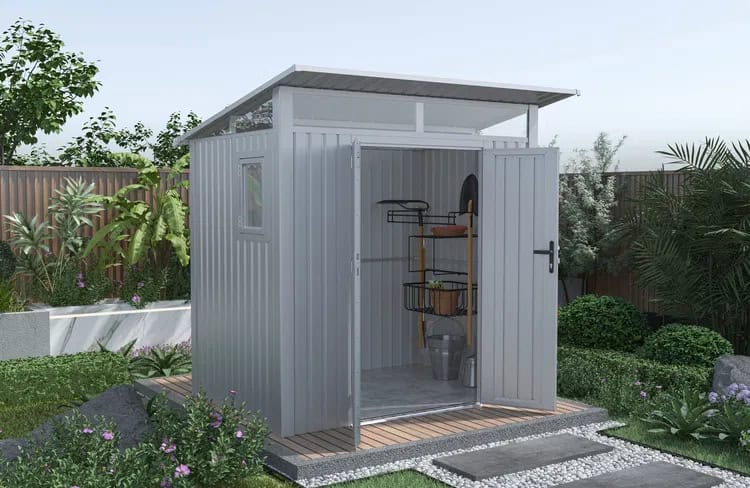
- £250 – £700: Small to mid-size galvanised units
- £700 – £1,500: Larger sheds with thicker steel panels, reinforced framing, and better corrosion protection
Lower maintenance than wood, no rot issues, and often supplied with a foundation kit. You still need a base underneath. (We’ll explain more on this later.)
Plastic sheds
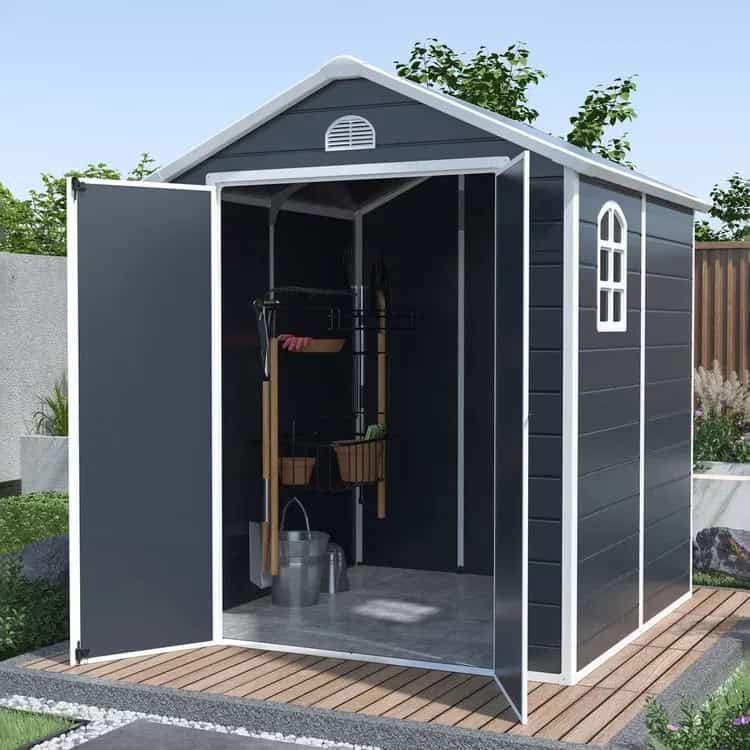
- £300 – £900: Most standard sizes
- £900 – £2,000+: Large or premium designs
No treatment required, minimal upkeep, and decent durability. Not as rigid as wood, but practical for general storage.
Note: The prices listed aren’t limited to the shed types or products mentioned above and may vary by manufacturer.
Shed Budgeting Guide on Base
Budgets tend to go off track here. The shed might seem reasonably priced, but the base can push it over. Don’t worry, as this is a one-off upfront charge, so make sure you don’t cut corners here.
Typical shed base costs
- Concrete base: £300 – £1,000+
- Paving slabs: £150 – £500
- Plastic grid systems: £100 – £300
Concrete is best for larger or heavier sheds because it stays solid under weight. It’s often the most expensive option since you’re paying for the materials and the labour needed.
Paving slabs suit mid-size sheds but must be level to stop doors sticking or panels shifting. Plastic grid systems install quickly and allow drainage, though the ground still needs to be compacted and levelled with a thin layer of sharp sand or pea shingle.
The price depends on the number of slabs, ground preparation, and labour.
Thinking of doing it yourself?
The Ongoing Cost of Wooden Sheds
Wood requires regular care to stay in top condition. Even after installation, you’ll want to apply treatment now and then to protect the structure and maintain its strength.
- Initial treatment: £20 – £60
- Repeat treatment: £20 – £60 every couple of years
Some sheds arrive with a base coat, which gives a good start. Regular treatment helps keep moisture out and the shed solid. Pressure-treated timber reduces how often this is needed, though it comes at a higher upfront price.
You might want to use this guide for more information:
Shed Maintenance: Treatments and Refurbishing
Adding Power to a Shed
Electricity is a must, even just for a light, but even more for power tools, extra sockets, and a heater. And that’s when the price climbs. For most sheds, you’re looking at around £300 – £800.
The cost covers more than just wiring. You need armoured cable, sockets, a consumer unit connection, and labour. The further your shed is from the house, the longer the cable run, and the more digging may be required, which adds to the bill. If the ground is uneven or full of stones, expect the work to take longer.
Tip: Start with what you need. A single light and one socket will do at first. Add extra sockets or points later, as you start using the shed more.
If you want a more sustainable way to heat your shed, this guide can help:
Heating a Summer House Without Electricity
Planning Permission Costs (When It Applies)
Most sheds are covered by permitted development, so planning permission isn’t needed. In some instances, though, they do require an application.
If you need to apply, the fee for a householder planning application in England is approx. £200 – £550. That only covers the application itself. You might also need to pay for drawings, adjustments, or professional advice, which adds another expense.
This guide will explain the conditions for whether or not you will need planning permission for a shed in your garden:
Round-up: Final Cost Breakdown
To get a full picture of what a shed will cost, here’s a breakdown of the price ranges for each section:
The shed
- Wooden: £300 – £3,000+ depending on size, build, and treatment
- Metal: £250 – £1,500 depending on size and frame strength
- Plastic: £300 – £2,000+ for standard to premium models
The base
- Concrete: £300 – £1,000+ for larger or heavier sheds
- Paving slabs: £150 – £500 for mid-size units
- Plastic grid systems: £100 – £300 for smaller sheds or quick installs
Ongoing timber treatment (wooden sheds only)
- Initial treatment: £20 – £60
- Repeat treatment: £20 – £60 every few years
Electrics
- £300 – £800 for a standard setup including sockets, wiring, and labour
- Higher if the shed is far from the house or the ground is tricky
Planning permission (if required)
- £262 for a householder planning application in England (as of April 2025)
- Additional costs may apply for drawings, adjustments, or professional advice
To give you some ideas, a small, basic shed with a simple base and minimal extras could come in around £600 – £1,000. A larger wooden shed with treatment, a concrete base, electrics, and planning permission (if needed) could push toward £4,000 or more.
Breaking the costs down like this helps you see where the budget goes and plan for both upfront and ongoing expenses. Use the ranges above to do your own calculation for the shed you want.
Need more advice on picking a shed?
FAQ
Can delivery charges affect my shed budget?
Yes, so make sure to account for this. Delivery costs vary by size, weight, and distance from the supplier. Some include it in the price, while others charge an extra £50 – £150 or more.
Garden Buildings Direct offer free delivery in most zones, but surcharges can apply on selected delivery dates and postcodes.
Does a shed need a base for every type?
Yes, a base is a non-negotiable for all types of sheds and garden buildings in general. Even lightweight plastic units need a level surface to prevent warping or shifting.
The base type affects both the upfront cost and how much preparation is needed, so include it in your budget.
Can I insure my shed, and does it add to the cost?
In most cases, a standard “Buildings and Contents” home insurance policy already covers your shed and its contents at no extra cost.
However, you should check your policy’s “outbuilding contents limit.” While your main house might be covered for £50,000, many policies cap shed coverage at £1,000 – £2,500. If you are storing expensive carbon-fibre bikes or high-end power tools, you may need to pay a small “add-on” fee (usually £20 – £50 per year) to increase that specific limit.
Get the general guideline here:
Are Outbuildings Covered by Home Insurance?
Do I need to pay extra for shed fittings or shelving?
Yes, most sheds don’t include shelves, hooks, or workbenches. Adding these can cost £30 – £200 depending on size and material. Some retailers offer them as add-ons at checkout, so you get the total price before you pay.
Does location in the garden affect shed costs?
Yes. If the ground isn’t level, you may need to add soil, concrete, or slabs to make it flat. Hard-to-reach spots, like behind a fence, up a steep slope, or around narrow paths, can also cost more to deliver or install, especially for bigger sheds.