Jump to:
Allotments are for you if having a home garden isn’t an option for your gardening dreams. They’re plots of land you can rent from the local council, though the sizes vary. Once you’ve got your lease, you can start growing, or even keep bees and smaller animals like hens.
Now, you might be thinking about adding a shed. It’s possible, as long as there’s space, and the structure fits right. Our full range comes in various sizes, most of which are allotment-garden friendly.
There are rules to be aware of, along with things to consider. Here’s what you need to know.
Can You Build a Shed on an Allotment? The Rules
Yes, you can, provided that you’re following these rules and requirements:
Get permission first
Don’t put up a shed without approval from your local council or allotment association. Better yet, check your lease agreement to make sure you’re following the guidelines.
But that’s not all. The shed must comply with the rules of your shared growing space to keep things fair and organised. After everything is signed off, only then will it be allowed.
Temporary structures only
Since you’re renting the space, anything permanent is off the table. You can put up a temporary allotment shed or similar structures if you have permission.
A small-to-medium shed is the safest choice, and something lightweight makes life easier. An 8×6 shed fits the bill; it’s compact, easy to manage, and roomy enough for tools, pots, and supplies. Most allotments also cap sheds around this size.
For materials, metal and plastic are great in terms of weight and maintenance. A metal shed made from hot-dipped galvanised steel panels is lighter than timber.
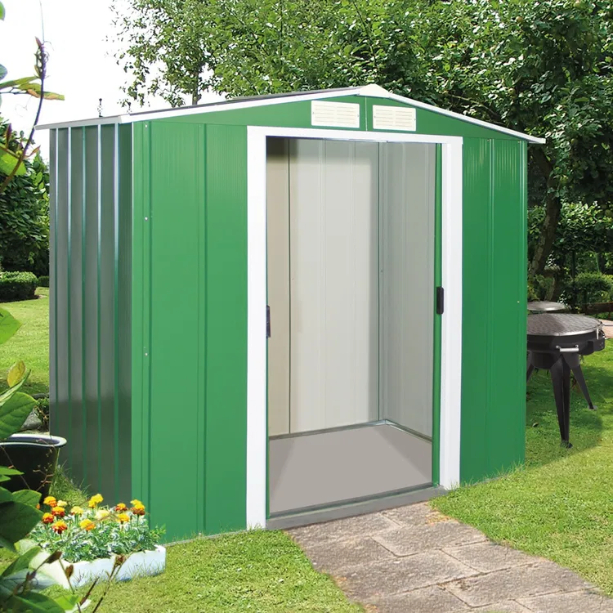
Take the Sapphire Apex Metal Shed, for instance. All parts come pre-cut with pre-drilled holes for easy assembly. It doesn’t have built-in flooring, which makes it even lighter and much easier to move if needed.
A plastic shed offers the same lightweight nature, even with reinforced metal framing. The metal isn’t there to add weight but to provide extra support and stability. Some plastic sheds come with a foundation kit as standard (more on that later). These kits aren’t permanently attached to the shed, so you can install them or use a different foundation.
Stick to the recommended shed size based on your allotment’s rules. A lighter shed is always a good choice, as it makes setup and moving much easier.
Note: You can always go for wood if you don’t mind the weight and the upkeep demand.
Build your own base (for temporary use)
Most allotment plots are soil, so the shed needs a steady base. Paving slabs, bricks, or similar materials can do the job. Building a concrete base is probably a no-no.
The golden rule is to place any garden room on a solid, level base for stability and support. Paving slabs are flat stones made from concrete, natural stone, or recycled plastic. They provide good drainage and are easy to adjust, reuse, or move around with minimal effort.
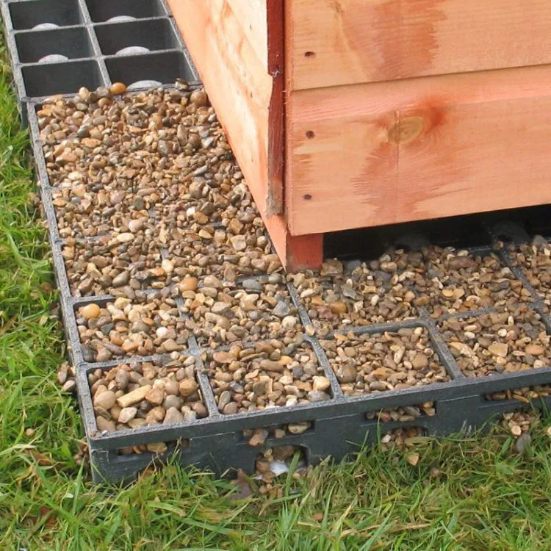
Or, you could go for a quick-fit base kit as another option. These are ready-to-use foundation systems. Once placed on the ground and interlocked, form a solid, level surface for the shed to sit on.
Most base kits come with a weed-resistant membrane. Fill the grids with gravel (10mm or larger), and you end up with a firm base that suits temporary setups.
Use and maintain your shed responsibly
You may have your own plot to grow what you like, but remember that others are using the space, too.
Don’t leave your tools or other valuables on the site, as there’s no guarantee they’ll still be there if left unattended. Keep anything you need to store locked away in your shed. The council won’t cover loss or damage to items left on site.
A sturdy padlock, like these shed locks, can help. Even so, we recommend storing only essentials and avoiding too valuable items inside.
Chemicals, fuel, or anything flammable aren’t a good idea either. They’re risky and could make your shed a target. If you need fertilisers or other chemicals, keep them at home or somewhere safe.
Your shed is your responsibility to repair and maintain. Most allotments follow this rule. If the shed isn’t up to scratch, the council can ask you to remove it, and it’ll be on you to sort it. So, give your garden shed a bit of TLC now and then to keep it in good shape and avoid any issues.
Can You Build a Greenhouse on an Allotment?
If a shed isn’t for you, a greenhouse is a great alternative—and yes, you can build one. Like sheds, you’ll need written permission before putting it up. Keep it to around 8×6 feet. And when it comes to materials, it’s best to opt for a metal greenhouse because it’s lightweight and easy to manage.
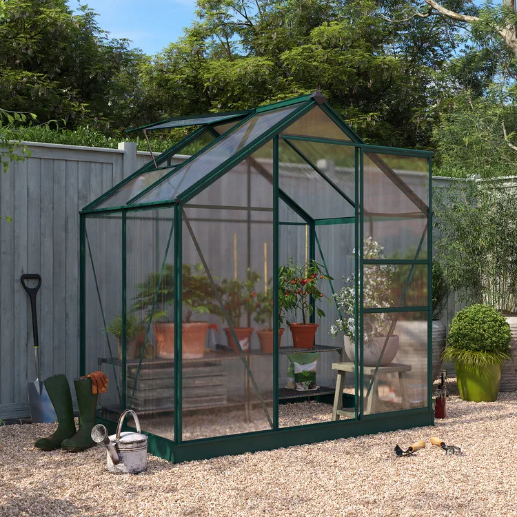
The BillyOh Rosette Hobby Aluminium Polycarbonate Greenhouse is worth a look. It has a sturdy aluminium frame, a sliding door, and all-round glazing that plants will enjoy.
If your plot is next to a building, a lean-to greenhouse could work too. The BillyOh Polycarbonate Lean-To Greenhouse has a similar setup to the Rosette. The difference is that it’s made to sit against a wall for support, and is complete with a galvanised steel base.
Get more options here:
Round-up
You can put a shed on your allotment if you have permission. Keep it under 8×6 feet and choose something lightweight so it’s easy to move. For a base, paving slabs, bricks, or a quick-fit kit work well for temporary setups.
Follow the allotment rules on how you use your shed and what you can store inside. If you’re more into protecting plants than extra storage, a greenhouse could be a better option.
These are just general guidelines to give you an idea of what’s allowed. Rules can differ, so always check with your allotment provider.
Ready to get creative? Check out this guide next: 12 Allotment Ideas to Maximise Your Garden Plot