Jump to:
Strong winds and storms can be tough on garden buildings like sheds. Intense windstorms can rattle the structure, especially if it’s not anchored well.
These conditions also increase the risk of moisture and paint peeling, leading to rot, decay, and further damage to the shed’s surface. In extreme cases, strong gusts could even lift or tear off parts of the roof, exposing the interior to rain.
Below, we’ve explained the problems that can crop up when things are left unattended. Stick around for handy tips and solutions to keep your shed in good nick, whatever the weather!
How to Anchor a Wooden Shed to a Solid Base
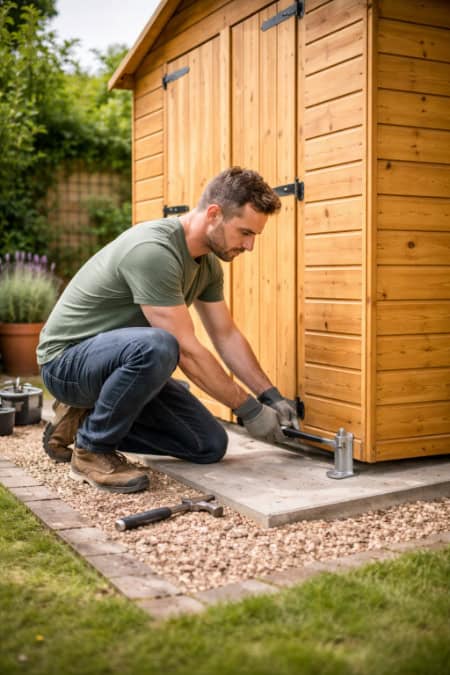
Anchor your shed by fixing it to a solid base with ground anchors, bolts, or directly onto a concrete slab. A concrete pad, level gravel, or timber frame works best for the foundation. Once the base is ready, attaching the shed is pretty straightforward:
- Check your base, and make sure it’s flat, level, and solid.
- Ground the anchors. For soft ground, drive metal spike anchors into the soil at each corner. Bigger sheds may need extra along the sides. Attach the anchors to the shed frame using bolts or strong traps.
- Bolt to concrete if your shed sits on a concrete slab. Drill holes through the base frame and use expanding bolts or coach screws. Don’t overtighten to avoid splitting the timber.
- If your shed comes with anchor kits, it should include brackets and bolts. Follow the manufacturer’s instructions.
- Final check and see to it that the shed is sitting level. Use small packs of gravel or shims if needed.
If you have a different type of base, such as a timber one, masonry bolts, lag bolts or coach screws can be drilled into the base frame. If your shed is on decking, firmly attaching your shed with tethers and timber screws is a simpler solution.
Check out some options below while you’re here if you’re thinking of getting a new one:
For metal and plastic sheds:
- Use the manufacturer’s anchor kit. Most metal and plastic sheds include kits designed for the base. These usually have brackets, bolts, or spike anchors.
- Position the shed by placing it on a flat, level base.
- Attach the anchors, from the frame to the base, with a bolt or screw. Or drive the spikes into the ground according to the kit instructions.
- Give the shed a gentle push to double-check stability. It shouldn’t rock or shift. Re-tighten any loose bolts or anchors.
We also have these types of sheds available for you to browse:
If your budget allows, add diagonal bracing to the shed walls. Doing so can help strengthen the structure and stop it from swaying in strong winds. This applies to all shed material: wood, metal, and plastic.
Tip: Check the anchors and foundations as part of your shed maintenance. Smaller sheds might not need anchoring, but some larger but lightweight ones, like metal sheds, definitely should have anchors in place. Keep an eye on any signs of wear or movement, and make adjustments as needed to keep the structure in place.
Need a guide for building a base?
Why does your shed need anchoring?
Strong winds can exert enough force to pull a lighter shed from its anchors. Without strong support, your shed may not withstand high winds. It may also shift out of alignment due to a poor foundation or base, which can result in costly repairs or even the need for a complete rebuild.
How to Prepare a Shed for Strong Winds
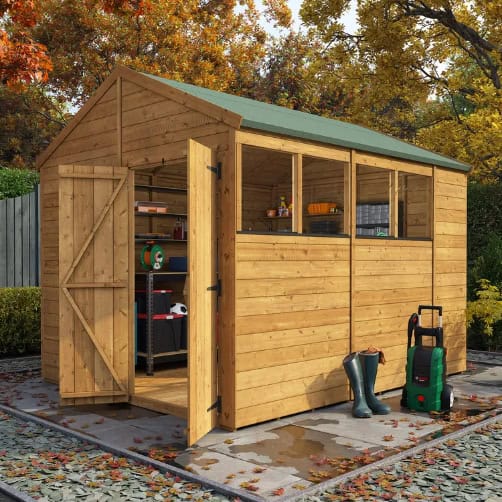
These are more on the upkeep side, starting with:
Treat your shed
Untreated wooden sheds are more prone to humidity and water-related issues. Deterioration is likely even when these structures come into contact with standing water. Just imagine how serious the damage from windstorms could be when they’re left exposed!
One way to protect your shed is to give it the right wood treatment for that added layer of protection. If you haven’t done so for years now, now’s the perfect time to get it sorted, whether there’s a windstorm coming or not.
We recommend oil-based wood preservatives, which offer long-lasting protection against rot. Even better, they don’t need to be reapplied as often as the water-based options. Fungicidal preservatives are also great for keeping fungal concerns at bay in damp conditions. Besides repelling moisture and wind-driven rain, a good-quality wood treatment can also prevent paint from peeling.
Next, apply a sealer that can bond with your chosen preservative once fully dry and cured. Polyurethane sealers, for one, are suitable choice. Apply it in thin, even coats to avoid trapping moisture, and follow the instructions for drying times between coats.
Get more tips here:
Shed Maintenance: Treatments and Refurbishing
All of this is less of a concern if you have a pressure treated shed.
Seal the gaps to keep strong winds out
Don’t overlook even the tiniest openings you can spot in your shed! Small gaps can let the wind inside, and it could spell trouble if there are too many. Strong winds might lift the roof or damage the walls. Before you know it, your shed could be in pieces.
Weatherstripping seals gaps around doors and windows; just focus on the bottom edges where drafts can sneak in. Roofing tape or sealant is great for patching loose shingles or gaps between panels. Caulk and expanding foam are effective in closing cracks in the walls as well as around the vents.
You might also find some gaps between the walls and the foundation of your shed. If you spot any, fill them with gravel or filler to stop the wind from sneaking underneath. And if your shed has vents, consider adding mesh screens or removable covers. They’ll keep out wind and debris while letting some airflow in when needed.
Secure the roof
A severe windstorm can find its way through the gaps in your shed roof, knocking it off and sending it flying. While sealing any openings can help, you can double the protection by securing the roof itself and any material on it like felt roofing shingles.
Watch out for any loose nails or screws and see if they are lifting in the felt material. Tighten them and replace damaged ones. Then, apply roofing sealant over the heads of the screws or nails to create a watertight seal.
If you’re thinking about replacing the roof felt, it’s a good idea to pop in a roofing underlayment underneath as well. It adds that extra layer of protection against water getting in. We recommend going for synthetic options—they’re lightweight, tough as nails, and do a brilliant job of keeping the water out. Rubberised asphalt is another solid choice, but make sure to pick one with a strong adhesive backing so it performs well.
Remove items that could blow away
A common sight after a wind storm is to see people’s wheelie bins tipped over, garden furniture strewn around the garden, and even trampolines picked up and blown into trees. Not only can these items become damaged, but they can also be turned into debris that could damage your or someone else’s property.
If a wind storm is coming, pack away your outdoor chairs, trampoline, and anything else which could be moved by a powerful enough gust. We’ve all seen the viral videos of someone getting hit by a parasol that has blown away in the wind, so definitely pack that away into your outdoor storage as well.
To protect your wheelie bins from being tipped over and rubbish blown all over your beautiful garden, consider a bin storage container. As a bonus, they also help conceal those unsightly bins and keep your garden looking classy.
UK Wind Speed Warning System
Wind speeds are classified using a colour-coded weather warning system: yellow, amber, and red.
- Yellow warnings mean mild to moderate impacts, with wind speeds from 30 to 40 mph. You might see small branches fall, but outdoor activities won’t be too affected.
- Amber warnings mean there’s a higher risk, with winds of 40 to 70 mph. Be prepared for bigger impacts, like fallen trees.
- Red warnings are the most serious, with winds over 70 mph. This can pose a real danger to life and property, leading to widespread damage, uprooted trees, and transport issues.
Make sure your shed is as sturdy as possible to handle those winds!
Round-up
Protecting your shed from strong winds and storms doesn’t just keep its parts from flying off or decaying in the rain. It also means it’ll last longer, keeping your belongings safe and dry.
With these tips, you can make sure it’s ready for whatever weather comes its way. Stay vigilant, check weather warnings, and take action ahead of time!
If you’re on the lookout for a new unit, you might want to consider our quality shed selections below:
Their interlocking design creates a sturdy, durable structure that can handle strong winds better. Plus, the tight fit means fewer gaps, stopping wind and rain from sneaking in.
Up next on your reading list: Pressure Treated vs Dip Treated Wooden Buildings