Jump to:
Your garden shed takes a beating from weather, wear, and time. A little regular upkeep is a chore, but it saves you from far bigger problems — and far bigger bills — later on. Wooden, metal, and plastic sheds each have their own needs, and you’ll find the steps for all three below.
This guide walks you through shed maintenance from base to roof, with a season-by-season checklist you can follow all year round.
Shed maintenance checklist
You don’t need to do everything at once. Build a few simple routines and your shed will stay solid, dry, and ready to use for years. Here’s the quick version — the full detail for each material follows further down.
Every month
- Sweep out leaves, dirt, and debris from the floor
- Clear gutters and downpipes so water drains freely
- Check the base is level and nothing is trapped underneath blocking airflow
Twice a year (after winter, end of summer)
- Inspect the roof for loose, cracked, or missing felt, shingles, or panels
- Check inside for damp patches, mould, or signs of a leak
- Test doors, hinges, locks, and latches; oil and adjust as needed
- Look for green algae or mould on walls and clean it off
Once a year (spring or early summer)
- Treat wooden sheds with a preservative or stain
- Touch up rust-prone spots on metal sheds
- Check plastic panels for cracks or warping
Seasonal shed maintenance calendar
Timing your upkeep to the seasons makes it manageable and catches problems before the worst weather hits.
Spring — The best time for the big jobs. Treat wooden sheds once the timber is dry, clean off winter algae, and check for any damage the cold months caused. Ideal window for a wood preservative or stain.
Summer — Warm, dry weather is perfect for washing plastic and metal sheds and spotting cracks or warping. A good time to fit or upgrade guttering while conditions are easy to work in.
Autumn — Clear gutters and roofs of fallen leaves before they block drainage. Check the roof is watertight ahead of winter storms, and sweep debris away from the base.
Winter — Mostly a watching brief. After storms, check for loose panels or felt and damp inside. Keep the ground around the shed clear so water drains away from the walls.
Wooden Shed Maintenance Guide
Wooden sheds can last a long time, but they need a little care along the way. Here’s what to keep an eye on:
Clean green algae off the wooden shed
That green layer is often mould, mildew, or algae that thrive in damp, shady areas. To remove, go for a gentle cleaning solution, such as a mix of water and white vinegar. Scrub the surface with a soft brush or sponge.
You’ll usually find stubborn spots on lower walls or the shaded sides where moisture lingers. It can also appear inside, especially if the interior is exposed to high humidity.
Get more tips here:
Apply wooden shed treatment
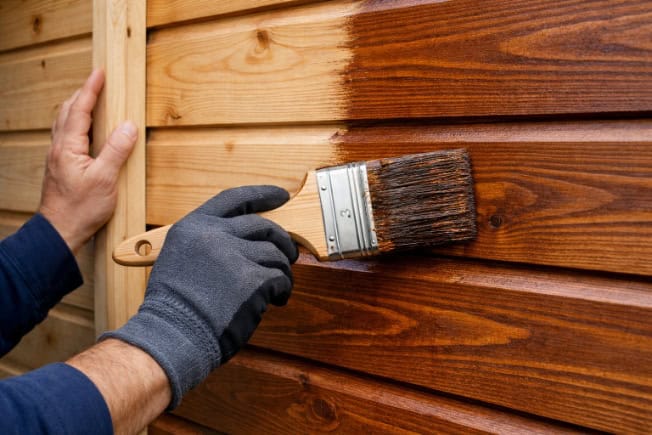
Wood can rot or warp if it’s left unprotected. Treat your shed with a wood preservative or stain once a year, ideally in spring or early summer once the timber is dry. A product combining a water repellent with a fungicide gives the most protection — and treat all accessible faces, paying particular attention to exposed sides and end grain, which absorbs the most water.
It’s worth knowing that a pre-treated shed isn’t a weatherproof one. Spray-treated and untreated timber sheds carry a 10-year guarantee covering rot, wood decay and insect infestation (requiring you to provide treatment yourself), and pressure-treated sheds carry a 15-year guarantee covering the same (coatings optional). Let it lapse and you may start to see soft spots or mould.
Wait until the building is up before you treat or paint it. Check the parts against the delivery note first — once components have been painted or stained they’re treated as accepted, so they can’t be returned or exchanged.
Check out this guide to treat your wooden shed.
Inspect the roof
The roof takes most of the weather’s impact. Give it a once-over at least twice a year — after winter and at the end of summer — or whenever needed, such as after a storm.
Look for felt, shingles, or tiles that are loose, cracked, or missing, and repair them promptly. Step inside and check for damp patches or mould; if you spot either, a leak is likely forming, so seal any gaps or repair the roofing before it spreads. That means patches or replacements of the roof material.
If the roof felt just needs cleaning, mix water and baking soda, wipe with a soft cloth or long-handled mop to lift dirt and moss, then rinse with water.
Related reading: How to Felt a Shed Roof and, if the roof is starting to dip, Wooden Shed Roof Sagging? How to Fix and Prevent It.
Check the floor
Wooden floors are vulnerable to rot if water collects on them. Get into the routine of sweeping out leaves, dirt, and any debris at least once a month. And if your shed has gutters or downpipes, confirm they’re clear and draining properly. Overlooked, and those blocked gutters might cause leaks that could damage the floorboards.
Metal Shed Maintenance
Metal sheds don’t need as much attention, but a few things can cause trouble if ignored. Here’s how to keep yours in good condition:
Protect the galvanised coating
Most metal sheds have a protective coating to prevent rust, but it wears over time, especially around doors and corners. Check these areas regularly for scratches, dents, or bare metal. If you find any, clean the surface and apply a rust-resistant paint or suitable primer.
If your shed isn’t coated, be aware of scratches or dents and aim to keep the metal dry. The same treatment mentioned above can be applied to any bare spots.
For more maintenance tips:
How to Stop a Metal Shed from Rusting
Look after the doors
Metal shed doors can bend, jam, or become stiff. Oil the hinges and check the doors close flush with the frame. Fix dents or loose screws straight away, and make sure the lock or latch works and isn’t sticking.
If sliding doors start to catch on the rails, it’s usually dirt, debris, or rust along the track, or worn rollers. Remove the doors, clean the rails thoroughly, lubricate the rollers with a silicone-based spray, and check the alignment — adjusting or replacing worn rollers as needed.
Plastic Shed Maintenance
Plastic sheds are the easiest to look after, but a few steps will make them last longer:
Wash the shed
Plastic sheds don’t need much, but we recommend giving yours a good cleaning a couple of times a year. Try washing it in spring and again in late summer, using a hose and mild soap. Small cracks or any damage are easier to spot then.
Watch for cracks or warping
Plastic sheds can warp in hot weather or crack when it’s cold. Walk around and pay attention to any panels that feel uneven or have gaps. Small cracks can be sealed, while larger or warped panels may need replacing. Check the roof too; any bulges can let water collect and cause further damage.
We have more techniques for you to try here: Repair Guide for Cracks in a Plastic Shed
Or get the full:
Clear the gutters and vents
If your shed has gutters or ventilation panels, make sure they don’t get blocked by leaves, dirt, or other debris. Take a look at them a few times a year, especially after storms or during autumn when leaves fall. Clear out anything that’s stopping water or air from moving freely.
Look after the base and ventilation
A shed is only as sound as what it stands on, and the base is easy to forget. Check that the base is level, intact, and free from rot, and that any paving slabs are secure rather than loose or rocking.
Just as important, make sure nothing is trapped underneath between the bearers, blocking the airflow that keeps the underside dry. Poor ventilation under the shed is a hidden cause of damp and rot in the floor.
If you’re maintaining an ageing shed — or planning a new one — a solid, level base does more for its lifespan than almost anything else. See our step-by-step guide: Building a Shed Base.
How to Pest-Proof a Shed
Pests are a real headache. Remove the hiding spots first. Keep the ground around the shed clear of leaves, long grass, and debris piles, and don’t let firewood, compost, or stored items lean against the walls. Inside, use sealed boxes for tools and supplies so nothing is left loose.
Then deal with weak spots — but match the fix to the pest. To keep rodents and larger insects out, close up any gaps and cracks they could get through. Bear in mind rats will gnaw straight back through soft filler or foam, so use a hard, gnaw-proof barrier such as fine metal mesh or steel wool packed into the gap. To protect the timber itself from wood-boring pests like woodworm and woodlice — which are drawn to damp, untreated wood — keep the shed treated with a wood preservative. Sealing keeps intruders out; treatment stops pests eating the wood — they’re two separate jobs.
For a related problem, see Rats in the Garden: Advice, Control and Elimination.
Round-up
No matter what kind of shed you have, a little regular care makes a big difference. Wooden sheds need treatment and roof checks. Metal sheds require attention for rust and doors. Plastic sheds do best with a good cleaning and watching for cracks.
Spend some time each season on these tasks, and your garden storage will stay solid, dry, and ready to use for years!
If you’re considering a new shed, check out our shed buying guide next. It compares materials, sizes, and features to help you narrow down your options. While you’re here, might as well explore our quality selections below: