Jump to:
You’ve probably seen your neighbours scattering salt grit on their winter driveways. Should you do the same thing? This practice is backed by science and thus works to melt ice and increase traction. But it does come with risks for your garden and outdoor structures, especially if it ends up near plants.
You’ll want to do it right, particularly if it’s your first time. Here’s what you need to know.
What is Salt Grit and How Does it Work on Driveways and Garden Paths?
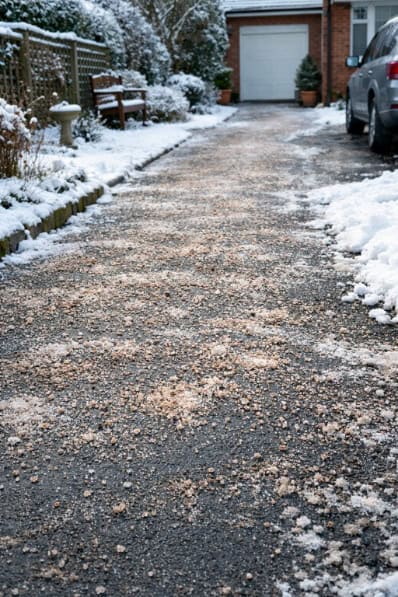
In the UK, ‘grit’ usually means rock salt used for de-icing — often the brown, less refined type with natural impurities. (Check here for what a local authority says about gritting.)
When spread on ice, it lowers the temperature at which water freezes. It helps prevent refreezing, but it’s less effective in very low temperatures and works best when there’s some moisture to form brine.
Is Salt-Based Grit Safe for Plants?
No, salt grit is NOT safe for plants, especially flower beds and borders next to garden paths. Salt can dry out soil, damage roots, and stunt growth. Those affected often result in yellowing or wilting.
But if you do have to sprinkle rock salt, keep potted plants in raised beds or away from paths that get salted. If that’s not an option, you could try alternatives like plain sand or grit-free de-icers.
Urea-based granules or calcium magnesium acetate (CMA), for instance, are an improvement. They are de-icers which help make your paths less slippery. They are considered less harmful for plants than salt, but it’s important not to overuse them. Keep in mind that too much can burn plants, so avoid letting the material come into contact with flower beds as much as possible.
How Winter Gritting Harms Garden Sheds?
Salt doesn’t just affect plants—it can cause problems for your sheds too. But when you really have to do it, there are ways to protect the structure.
- Wooden sheds: De-icing salt isn’t known for “causing rot” directly, but wood that’s repeatedly splashed with salty water can suffer salt damage over time (sometimes called “fuzzy wood”), which is a different issue to fungal decay. The more immediate risk for most garden sheds is that salty residue can wear coatings and leave damp, grimy patches if it’s left to build up. If grit splashes onto the shed, brush it off and rinse the surface after heavy gritting.
- Metal sheds: Salt speeds up rusting and corrosion, and salty deposits can be especially harsh on edges, fixings, hinges and door tracks — even on galvanised steel. If you’ve gritted heavily nearby, hose down splashes and wipe metal parts to slow corrosion.
Even the best wood or metal won’t escape the drying, cracking, or corrosion from salt gritting. Take extra care with your winter maintenance this year to avoid these risks.
If you’re storing grit in your garden, we’d recommend keeping it either a distance away from the shed or inside the shed in a solid container that won’t leak (not a bag).
This guide can also help while you’re at it:
How to Prepare Your Outdoor Storage Units For Winter
How to Spread Salt Grit the Right Way?
Don’t just toss it and go. Spread the rock salt evenly over icy patches instead of piling it up in one spot. Use enough to stop slipping—too much and you’re putting your plants and shed at risk.
For driveways and wider paths, use a handheld spreader or scoop for better control. After the ice melts, sweep up any leftover grit so it doesn’t build up on the beds or close by structures.
When to Skip the Salt
You might be better off using sand, gravel, or grit-free alternatives on mild frosts. The habit of clearing snow from paths early can also stop ice from forming, so you might not need to use salt at all.
Overall, you can tag along with your neighbours, a bag of salt grit in hand. Just be selective about when and where you sprinkle it, and watch out for slipping!