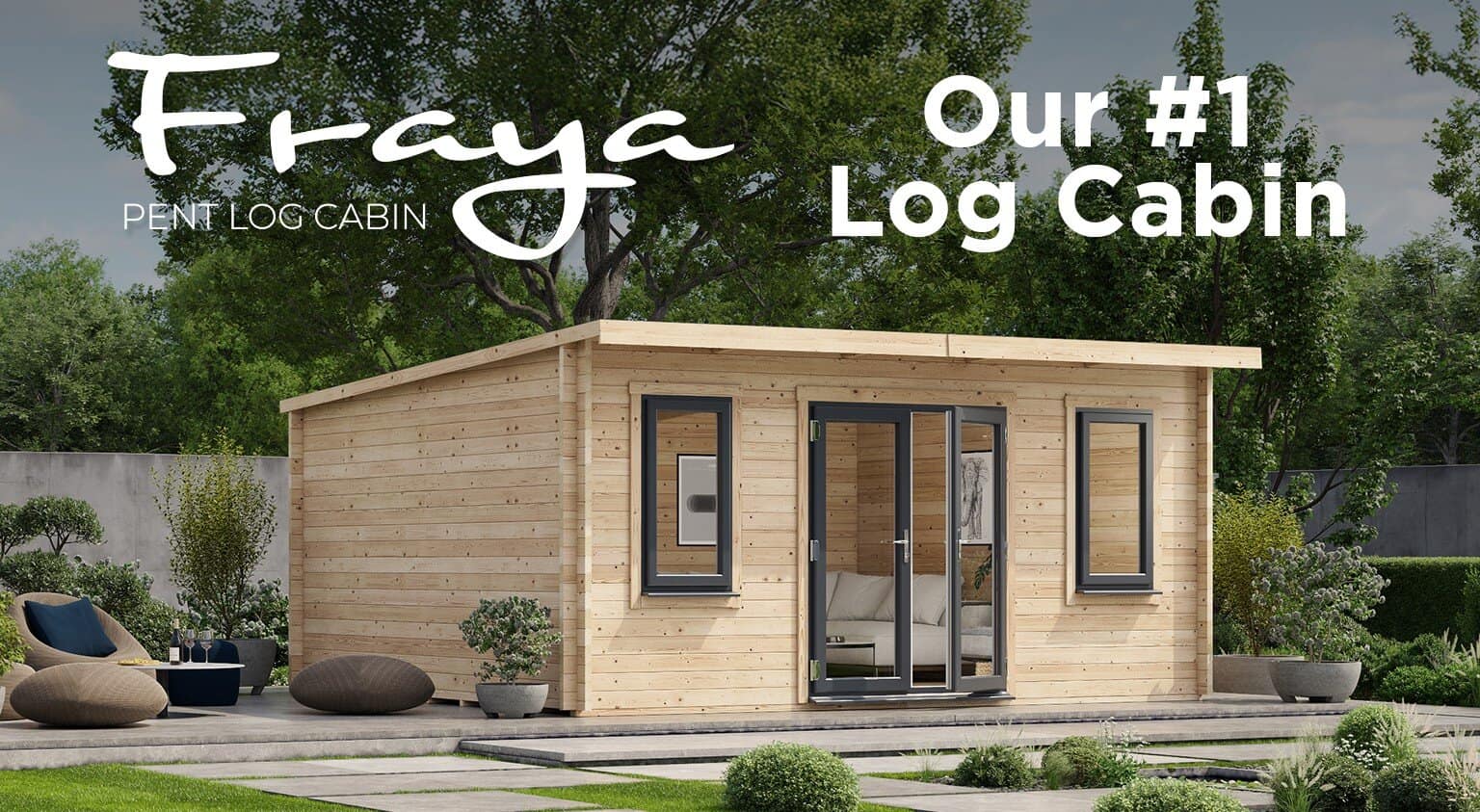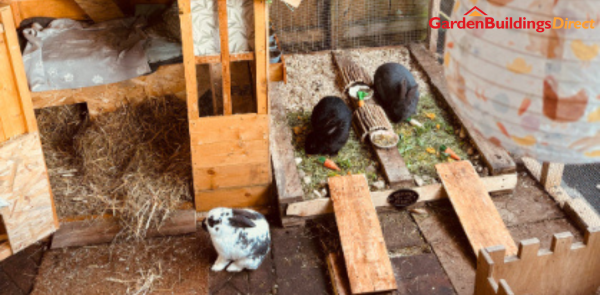

A pair of average-sized rabbits needs a minimum of 3mx2m of space according to the Rabbit Welfare Association & Fund (RWAF). Standard hutches might not provide quite enough, but a small shed or a kid’s playhouse can work. It’s all that’s needed for a comfortable space that keeps the bunnies active and protected year-round. Plus, you might be looking for a space where you can spend some quality time with your fluffy friends. Read on for tips.
Wooden Shed for Your Rabbit House
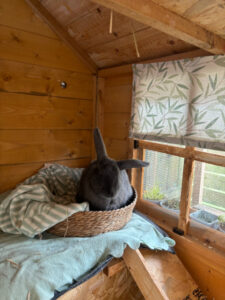
What the shed is made from affects both temperature (e.g., heat in summer and cold in winter) and protection from predators.
Rabbits are sensitive to shifts in the weather, and their safety can be at risk, especially when the shed leaves them exposed outside. This is why wooden sheds are the best choice. The material itself is a better insulator than metal or plastic alternatives, not to mention it’s solid too. Unlike metal, which can get hot in the sun or plastic, which isn’t strong enough for long-term use. The only better option is brick, but that would cost a lot more (however, they are the go-to option for professional pet sitters).
What shed size is best for rabbits?
When it comes to the shed size, bigger is always better, but it doesn’t mean a larger structure. 3mx2m is a great starting point for a small shed – in feet, that’s roughly 10×6.5.
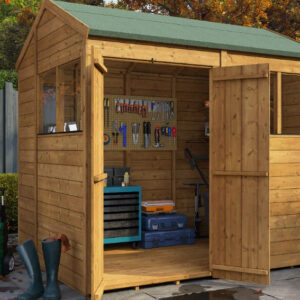
To comfortably meet this requirement, a 10×8 shed is a fantastic starting point. One of our best recommendations is the BillyOh Pro Reverse Apex HD Shed, specifically the 10×8 size.
Even though it’s not huge, there’s plenty you can do inside to turn it into a rabbit shed home. How about placing a small hutch in one corner for resting? That still leaves floor space for hopping and playing with a few tunnels or toys. But we’ll let you have fun furnishing the space!
How to Set Up Your Rabbit Wooden Shed
Sure, a wooden shed is nice, but it still needs to meet the needs of your fluffy friends. Let’s start with a short checklist for their comfort, safety, and security:
Find the best spot for the rabbit shed
Place the shed somewhere dry, level, and sheltered from strong winds. You’ll also want to avoid areas that flood or get waterlogged. And make sure the location is easy to access for feeding, cleaning, and checking on them
For instance, a corner of the garden near a fence or under a tree canopy can give them some shade. You could also place it near a garden path or close to a gate to make bringing food, water, and bedding easier.
Protect the shed floor
Timber floorboards are great, but they can wear out or absorb mess. Lay lino or waterproof mats on the floor. It stops mess soaking into the wood and makes it quicker to clear out after the rabbits. Go for non-slip lino if possible as rabbits tend to slip on standard lino.
Tip: Scatter a layer of straw or hay over the mats to give your rabbits something soft to sit on and help absorb moisture.
Add insulation and wall protection
Rabbits love to chew, and plain wood may not keep them warm enough in winter. It’s best to add chew-resistant insulation or double-panelling sections. Alternatively, cover the lower walls with a thin layer of plywood or bathroom-safe wallboard. Or why not do both for extra durability and peace of mind?
Ventilate the rabbit shed house
Fresh air is a must. If the shed windows can’t be opened, add small vents or drill holes high on the walls to circulate air to avoid drafts at floor level.
Read more about keeping your shed well-ventilated:
Shed Ventilation: How‑to and Things to Consider
Create hideouts
Rabbits feel safest when they have places to hide. Inside the shed, you can include a small hutch or a wooden box. Try arranging a couple of options at different spots.
Raised hideouts can give them a perch to watch the shed, while floor-level boxes let them burrow and snuggle. Or go for the DIY route with cardboard boxes or tunnels. Place a few hideouts along the walls or in corners so they have quiet spots to rest.
Set up a toilet area
These tiny hoppers can be litter-trained. Place one or two litter trays in a corner, using paper-based or wood pellet litter that’s safe if nibbled. Clean regularly to prevent smells and maintain hygiene. Do not use cat litter.
Secure run
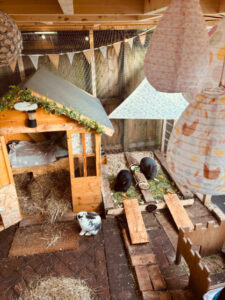
A run is basically a fenced outdoor area attached to the shed. This is a necessary item if the shed is smaller than the ideal size. One example is using a kid’s playhouse instead. This can work, provided that they have a space to run and move around.
It needs to be escape-proof, though, and protected from predators like foxes.
Tip: Use raised platforms or a concrete base in the run to keep rabbits from digging out.
Use a strong and safe wire
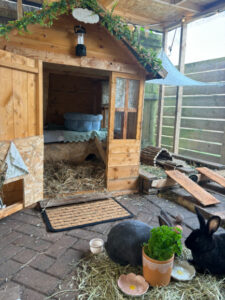
Speaking of protected, might as well add a wire around the rabbit shed house. Chicken wire is too thin and easy for foxes and other pests to push through. Instead, opt for a heavy-duty 16-gauge welded mesh with small holes (about 1.3cm across). Attach to the shed and the run, with no gaps at the bottom or corners.
Keep bedding dry and comfortable
Keep rabbits warm and comfortable with clean, dry bedding such as straw or hay. Swap out any soiled bedding often to give them a warm, safe place to rest.
What to Do Before Moving Rabbits into a Shed
Spend the first week watching the shed so nothing causes trouble once the rabbits are inside.
Take time to introduce them gradually
Let them explore the shed for short periods, without cutting them off from the indoor space they’re used to. Watch how they react to changes in temperature.
Mornings and evenings can be cooler than expected, and summer afternoons can get warm inside a shed, even if it’s shaded. During extreme temperatures they may need to come back inside your house.
Check the shed each day for the first week
Look for any gaps, loose wires, or signs your rabbits have been chewing where predators could get in. Keep their food and water fresh and dry, and change any soiled bedding straight away.
We hope these tips help you convert your shed into a rabbit house your hopping friend will enjoy living in!
FAQs on Legal Requirements
Do I need planning permission for a rabbit shed?
No. Most garden sheds don’t need planning permission, even if used as rabbit houses. As long as the shed itself is under 2.5m tall (among other varying height rules), not in your front garden, not taking up more than half your outdoors, and not used for business. If you’re building a larger shed or using it commercially, check with your local council.
We have a more extensive guide covering all the rules:
Garden Shed Planning Permission Guide
Are there rules on boundaries and drainage?
Yes, some have rules about how close you can place the shed to boundaries and how they affect drainage. Again, see what your local planning rules say, especially if your shed is:
- Near a neighbour’s fence
- On sloped ground
- A part of the garden prone to waterlogging
This way, you avoid disputes and make sure your rabbit shed can be placed safely and legally.
Can I use electrical equipment in the shed?
Yes, but make sure it’s safe for outdoor use and suitable for pets. Exposed wiring or DIY electrical setups can be dangerous for rabbits.
For safety, consider having any electrical work installed by a qualified electrician.
How do I keep my rabbits safe from predators?
Make the shed predator-proof with strong wire, check for gaps, and consider a raised platform or concrete base. Even though it’s not a legal requirement, the Rabbit Welfare Association & Fund (RWAF) recommends rabbits have suitable environments, including protection from foxes, rats, and other pests.